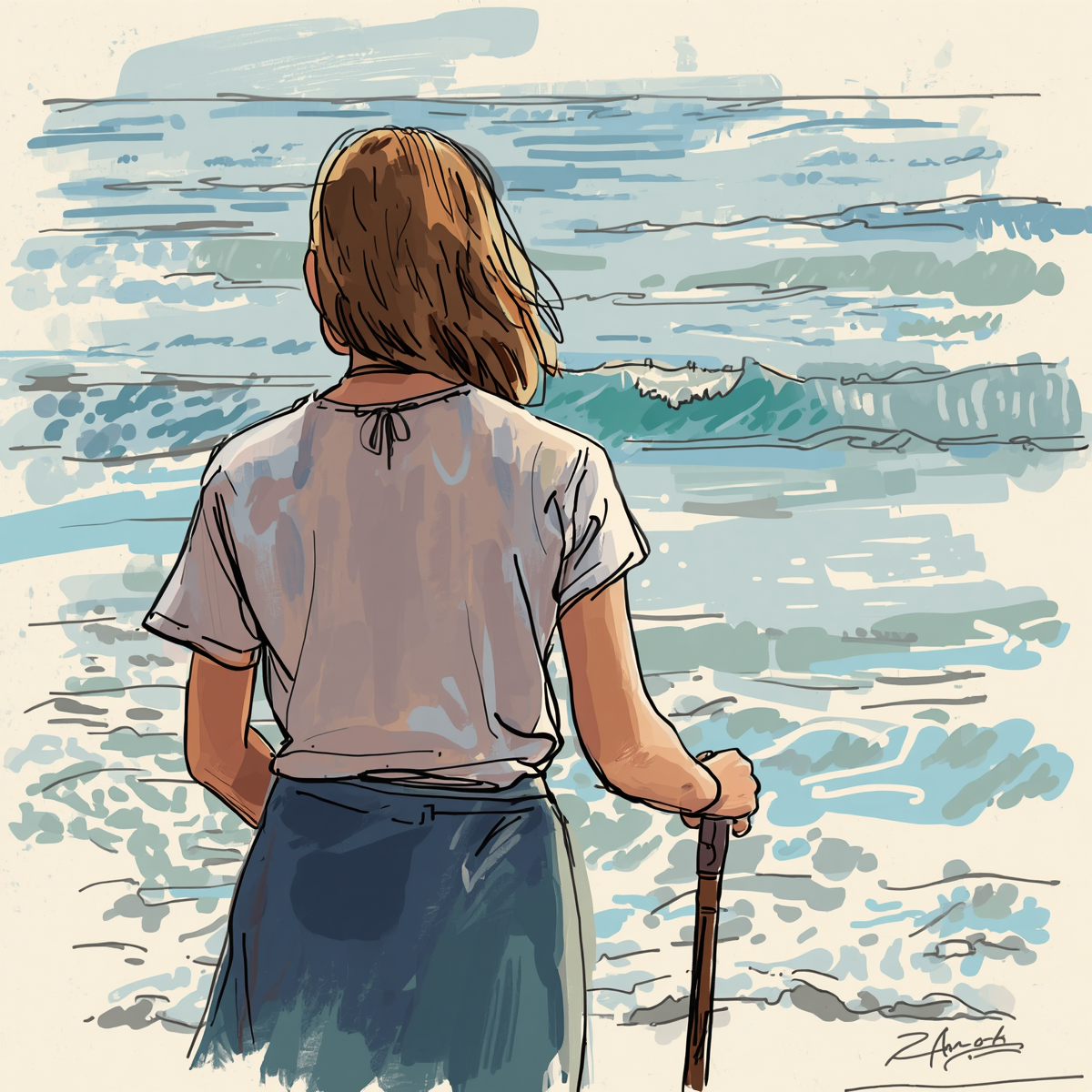
When your body changes, and you don’t quite recognise yourself
Sarah was in her mid-50s when she was diagnosed with Parkinson’s disease. At the time, it didn’t fully land. The changes had been small to start with. A tremor in…

When he joined the Teams meeting, I could feel his anxiety before he even spoke. His breathing was shallow, his shoulders tight, his eyes searching the space as though he wasn’t sure if it was safe to be there. It’s something I’ve learned to recognise over the years, when the body speaks before my client does.
In those moments, my first instinct isn’t to dive into words, it’s to slow down. I soften my own breathing to meet his nervous system where it is. This isn’t the right time to push or pull the client in any kind of direction, not that I would ever do this, anyway, but right now is where being a trauma-informed practitioner really comes into its own. It’s not about what happened in the past; it’s about what is happening right now in the space between me and my client, the therapeutic space.

I could see he wanted to be there, but part of him was saying, not yet. So instead of asking him why he’d made contact at this time, I asked if he’d try something with me. We placed our hands on something tangible and took a slow breath together, noticing the contact with the chair, the ground beneath him, and the air moving in and out. I told him we didn’t need to change how he felt – we just needed to notice it. Eventually, we were able to do this with our eyes closed, allowing him to further connect with the feeling in his body
This is where trauma-informed work begins. It’s not about a set of techniques or buzz words. It’s about safety, choice and presence. It’s about understanding that the body holds memory, and sometimes words are too sharp or too soon. People come into therapy carrying things they can’t always name. Their stories live in the posture their bodies adopt. In anxiety, in depression and stress in all its forms.
This man had spent years bracing against life, so even calmness can feel threatening. Stillness can feel like danger. So, the role of the trauma informed therapist isn’t to tell someone to relax or let it go, but to hold space, until the body learns that stillness can also mean safety. Sometimes that starts with something as simple as breathing together. Not as a trick to calm down, but as a way to exist in the same rhythm, to enable a connection between us, even for a moment.
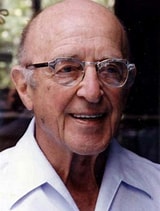
It never fails to amaze me how presence itself can be healing. Carl Rogers, the creator of the person-centred approach, called it congruence. The therapist showing up as a real grounded person. Whatever language you use, the essence is the same. Healing happens when one human being is truly with another.
Over time, this client began to recognise his own signals. He’d pause and say, ‘I think my chest is tightening again’ or ‘I can feel my muscles beginning to tense.’ Those might sound like small things, but they’re huge. That’s the body remembering that it’s safe enough to feel again.
Being trauma-informed, at its heart, is about humility. It’s remembering that safety must come before insight, and presence must come before progress. Sometimes, before a person can speak their truth, they first need to know they won’t shatter when they do.
And often that begins with a single shared breath.
If you find you can sometimes feel lost, dysregulated and needing to concentrate on breathing/mindfulness techniques, and your younger years were stressful, you may well find this article helpful.





© The Kagami Group Ltd. Company Registration Number: 16557949 | Privacy Policy